
RAISING TAMARIKI, RECLAIMING FUTURES
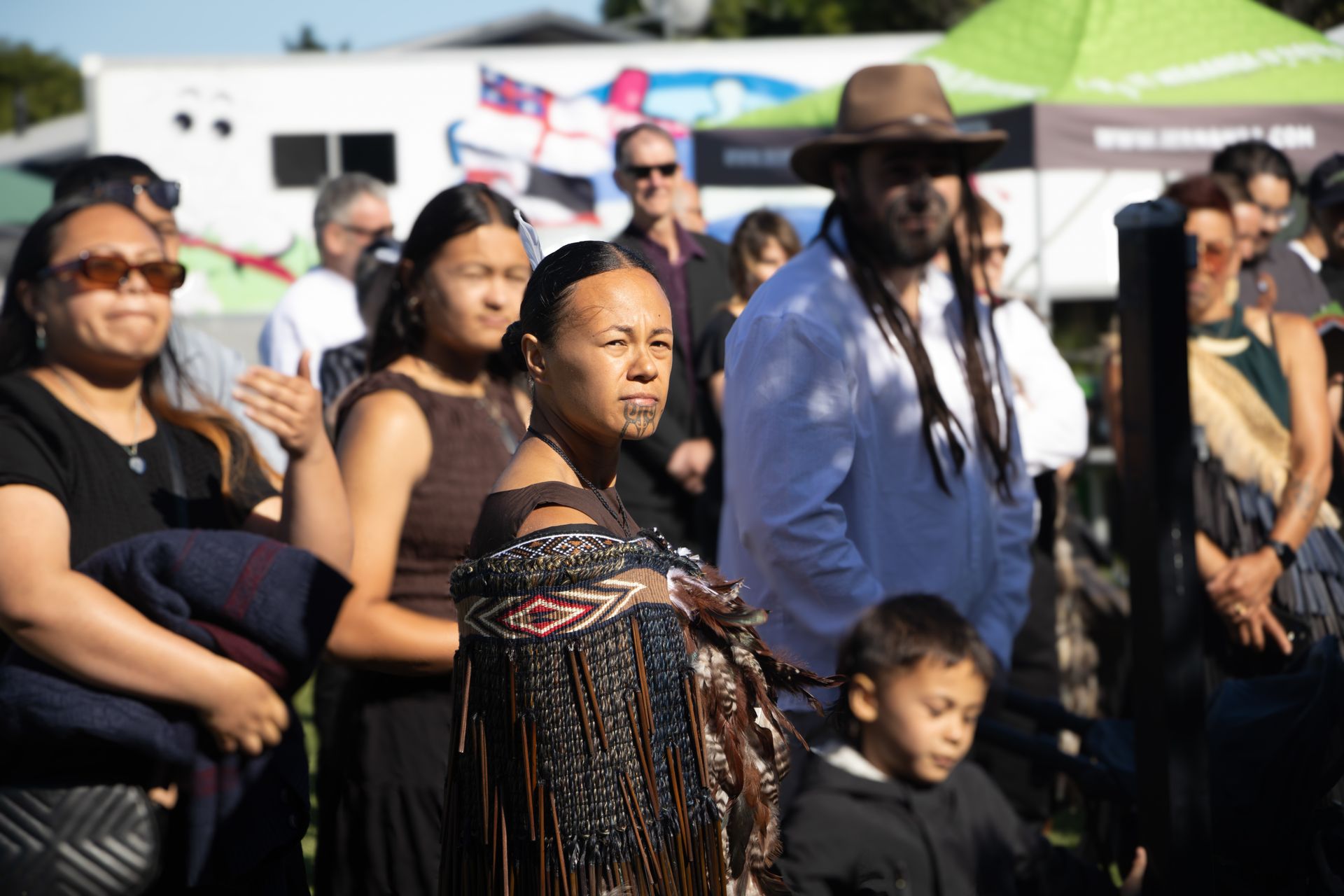
Centre is Latisha Coffey at 2025 Te Rā Whakapūmau, Ōtaki. Photograph by Susannah Brons
Latisha Coffey
Te Āti Awa, Ngāti Tūkorehe
Tapuhi Hauora Tūmatanui - Public Health Nurse
2025 Student and Graduate of Poutāhū Whakahaere – Postgraduate Diploma in Māori and Management
27 Hanuere 2026
Latisha Coffey descends from the Preston (Paratene) whānau of Taranaki, the Perawiti Ranapiri whānau of Ngāti Tūkorehe, and the Simpson whānau from the islands of Kuki Airani and Tahiti. She was raised in Te Awa Kairangi, in the community of Pōmare, a place she proudly calls home.
Guided by her kuia’s vision, Latisha was immersed in te ao Māori from an early age, attending kōhanga reo and continuing her reo Māori education at Te Ara Whānui Kura Kaupapa Māori o ngā Kōhanga Reo o Te Awa Kairangi. During these years, reo Māori was the primary language she spoke and truly understood. She later transitioned into mainstream education, where she met her husband, Ryan Coffey. Together, they became parents at 17.
Once their first pēpi was settled into kōhanga reo, Ryan entered the workforce while Latisha returned to complete college. Determined to provide the best opportunities for their tamaiti, Latisha went on to study a Bachelor of Māori Nursing through Whitireia.
Today, Latisha and Ryan are parents to three tamariki: Kairangi (15), Tamarau (5), and Tāwhaki (1). Latisha became hapū with Tāwhaki while studying at Te Wānanga o Raukawa. All their tamariki have been raised through kōhanga reo and have progressed through rūmaki reo and wharekura, with the aspiration that they will one day continue to Te Whare Wānanga. They are fluent speakers of reo Māori, fulfilling a commitment Latisha and Ryan made from the birth of their first child.
Becoming parents at a young age has shaped Latisha’s worldview. Their tamariki are the reason she and her husband live intentionally, knowing that every decision is made not only for their children, but for the uri whakaheke who will follow.
Latisha chose to pursue her tohu to strengthen her understanding of rangatiratanga and to better navigate, influence, and nurture hauora Māori. Through deepening her mātauranga, she aims to contribute meaningfully to the empowerment and wellbeing of whānau, hapū, and iwi. Te Wānanga o Raukawa was a natural choice, as its mātāpono and kaupapa Māori align closely with the values she lives and works by. The Wānanga felt like a safe place where she could belong, supporting both her learning and her tuakiritanga.
Latisha has actively applied the knowledge gained through her studies across her mahi, hapori, and whānau. In her professional role, she has led the development of hauora resources for kōhanga reo, guided by kaupapa Māori. This includes embedding frameworks such as Te Whare Tapa Whā into daily practice, planning, and communication, ensuring hauora initiatives are culturally grounded and meaningful. As a result of this mahi, Latisha was offered a dedicated role as a tapuhi for her local kōhanga reo, supporting them fully on their hauora journey.
Her learning has also supported reconnection within her own whānau, including multi-generational decision-making and planning anchored to their marae. One example is her son Tamarau, for whom the whānau set a kawa before his first birthday that only reo Māori would be spoken to him. Now five years old, reo Māori is his first language and natural way of communicating. This kaupapa has extended into the wider hapori through hākinakina and the establishment of a sports club grounded in kaupapa Māori, ensuring that everything grown is sustained by Māori values at its core.
One of the most significant differences Latisha has experienced at Te Wānanga o Raukawa is that kaupapa Māori is not optional, it is foundational. Mātauranga Māori is the starting point, allowing her to learn without compromising or translating her worldview. Equally important is the emphasis on whanaungatanga and collective growth, with knowledge expected to be taken back to benefit whānau, hapū, and iwi.
The learning is holistic and lived, acknowledging wairua, hinengaro, tinana, and whānau. For Latisha, the most rewarding aspect of her study has been the way it has strengthened her identity as a Māori woman, a māmā, a hauora practitioner, and an uri. This journey has been one of reclamation, restoration, and responsibility as a future tūpuna.
Despite the challenges of balancing time and overcoming self-doubt, particularly around reo Māori, Latisha draws strength from shared journeys. Her husband’s perseverance in reclaiming his reo has been a powerful source of inspiration. She believes learning is lifelong and collective and wholeheartedly recommends this tohu to all: He oranga wairua tēnei ara ako.
If you would like to know more about our courses, go to Our Courses
