
Empowering wāhine to reclaim their voice, strengthen their marae, and carry karanga with confidence.
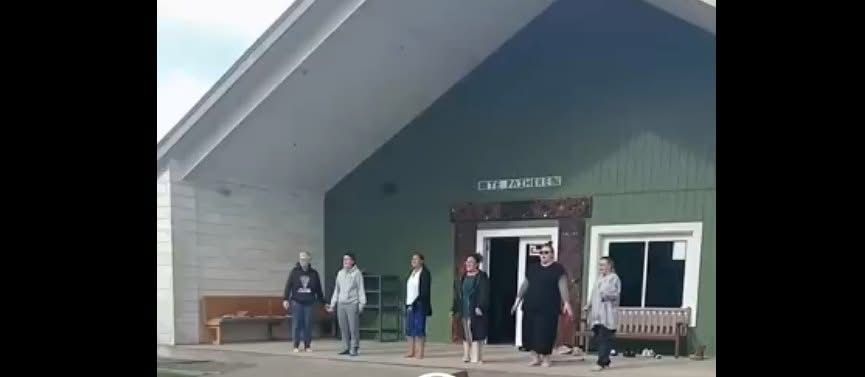
At Araiteuru Marae in Dunedin, a mātāwaka space grounded in community and belonging, wāhine are finding their voices again, not just in sound, but in identity, confidence, and connection.
For kaiako Tania Williams, nō Ngā Puhi, this journey is deeply personal.
Raised with the support of her Pākehā mother, it was through Araiteuru Marae that Tania was first encouraged to explore and reconnect with her Māori identity. While she later found her way back to her own iwi, Ngāpuhi, as an adult, it is Araiteuru that she continues to return to, a place that nurtured her, and where she has now given back for over 11 years.
That lived experience shapes everything she brings into the space.
Through Poupou Karanga, learning is not confined to the classroom. It is lived, felt, and carried back into whānau, into marae, and into the spaces where it is needed most. For many wāhine in Te Waipounamu, the journey into karanga is also a journey home, often after generations of disconnection caused by migration and colonisation.
“Poupou Karanga becomes a safe place to begin again,” she shares. “It’s not about how much you know, it’s about creating a space where wāhine can reconnect, in their own time, in their own way.”
Even within small cohorts, the impact runs deep. Each wahine who steps into the space carries that learning beyond herself, into her whānau and wider community.
Central to Tania’s approach is the creation of porohita tapu sacred circles of learning where wāhine are supported not just intellectually, but emotionally and spiritually. Within these spaces, wāhine are able to unpack, reflect, and rebuild, often confronting the impacts of disconnection in a safe and supported way.
As one graduate, Piupiu Turei, shares, “Poupou Karanga opened my eyes and voice up to receive wisdom, teaching and connection with my tūpuna. It was such an uplifting and joyous experience, and the highlight of my 2025 year.”
For others, the journey is ongoing but no less transformative. Shayna Rozelle reflects, “Poupou Karanga has guided me to listen, observe, speak and walk with grace and comfort in every direction that I take… I have definitely grown stronger, have paid more attention to wairua, and often find myself referring back to what we learnt with Tania in times of need.”
Rather than viewing karanga as something to be performed, Tania reframes it as a role grounded in responsibility, balance, and service. To be a kaikaranga is to be in tune, to know when to call, what to call, and why, and to hold space with humility.
This understanding shifts the narrative from self-doubt to empowerment. As Jass Adlam shares, “I started Poupou Karanga full of self-doubt… my reo wasn’t enough, I hadn’t spent enough time on marae. But through this journey, we were empowered to trust in who we are as wāhine.”
The impact of Poupou Karanga is already visible across Araiteuru and beyond. Wāhine who once stood on the side are now stepping forward, leading pōwhiri, supporting their marae, and carrying tikanga into their homes and workplaces.
Kimberley Hera describes it as “such a special space and wise rōpū and kaiako to learn with. I highly recommend this safe space for learning our pūkenga taonga.”
For Alana Alexander, the depth of learning extends beyond practice, grounding wāhine in whakapapa and wairua:
“E ako ana mātou i te whakapapa e tātai ana mai i ngā atua wāhine ki a mātou… hei whakaohooho i te wairua karanga. He matatini te mahi, ā, nō mātou te whiwhi ki te ū ki tēnei kaupapa tino hirahira.”
Importantly, Araiteuru as a mātāwaka marae creates space for all, including those who may not feel strongly connected to a specific iwi or hapū. It is a place of return, of belonging, and of growth.
“Sincerity, humility and aroha, those are the things that matter,” Tania says. “This kaupapa is about inclusion, not limitation.”
At the heart of the learning is a strong spiritual foundation. Karanga is not simply taught it is felt. It is guided by wairua, shaped through experience, and carried with intention.
This is the third time Poupou Karanga has been delivered at Araiteuru Marae, a reflection of its impact and the continued need within the community. Looking ahead, there are aspirations to further strengthen these pathways, continuing to support wāhine to stand confidently within their roles on the marae and beyond.
Because when one wahine finds her voice, she does not stand alone she carries her whānau, her marae, and those who came before her.
Nāu te rourou, nāku te rourou, ka ora ai te iwi.
Click the following links to learn more about delivering as a cohort or more information about Poupou Karanga.
