
From the waters of waka ama to the pathways of mauri ora
Whakapiki te mauri, whakapiki te tangata.
When mauri is strengthened, the people are strengthened.
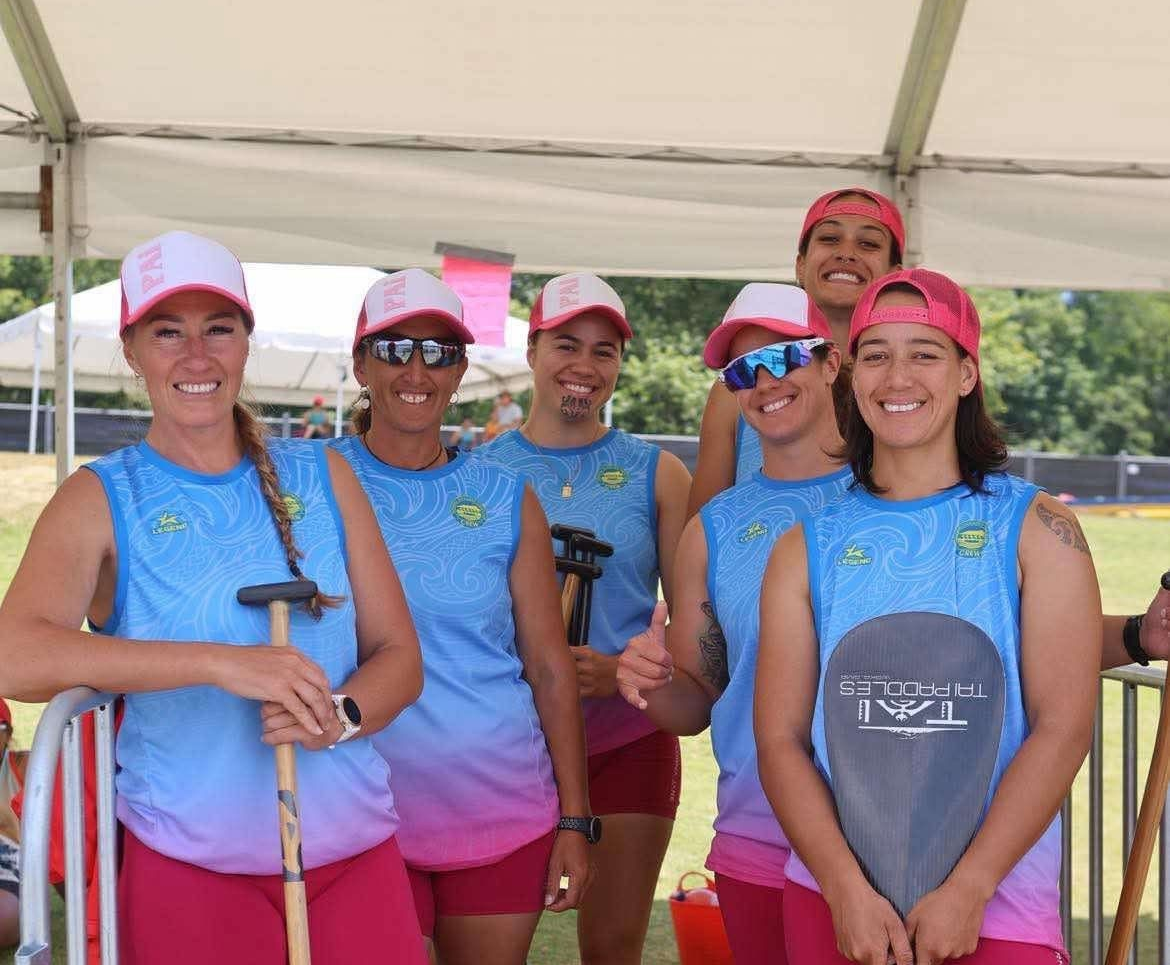
National and World Waka Ama Champion Te Rangihuia Henare (Ngāti Raukawa, Ngāti Huia, Ngāti Kahungunu ki Wairarapa) has spent much of her life on the water. From paddling as a young girl through to representing Aotearoa on the world stage, waka ama has taken her across the motu and around the world.
Among her many achievements, Te Rangihuia won five gold medals and two bronze medals at the World Elite and Club Waka Ama Sprint Championships while still a teenager. Yet despite years immersed in the sport, she says studying Poupou Whakapiki Mauri at Te Wānanga o Raukawa helped her see waka ama and wellbeing through a completely different lens.
“Waka ama is more than just paddling,” she says. “It’s about whakapapa, values and connection. From karakia through to being out on the water together, you realise you’re not just paddling for yourself, you’re moving as one alongside the same rhythms and whakaaro our tūpuna carried generations ago.”
Poupou Whakapiki Mauri is a 16-week NZQA Level 4 Certificate programme that can be completed online by individuals or delivered face-to-face to groups, clubs, marae and organisations. The programme introduces students to strategies, principles and philosophies grounded in a Māori world view, supporting people to strengthen their wellbeing holistically across all aspects of life.
Using frameworks such as Te Whare Tapa Whā, the tohu explores the importance of balance between taha tinana, taha hinengaro, taha wairua and taha whānau. Rather than focusing solely on physical health, students are encouraged to consider the wider factors that contribute to mauri ora, including relationships, environment, identity, spirituality, movement, recovery and nutrition.
For Te Rangihuia, the programme helped connect many of the teachings and practices she had grown up around within waka ama and te ao Māori.
“A lot of our people know the sport, but they may not always understand the deeper mauri involved in it,” she explains. “The programme helps people see the connection between movement, recovery, kai, the environment and our wellbeing as a whole.”
Alongside being a graduate of the programme, Te Rangihuia has also supported the delivery of Poupou Whakapiki Mauri to various waka ama clubs, helping adapt learning activities and discussions to reflect real-life experiences within the sport. Topics have included recovery processes, safety and hazard management, environmental awareness, nutrition, rāhui, tikanga and the responsibilities clubs hold within their own rohe and waterways.
“The learning becomes easier to grasp because it’s being viewed through the lens of waka ama,” she says. “But the kaupapa can then be applied to many other parts of life. It helps our people make better decisions for their wellbeing in everyday situations.”
The programme’s emphasis on whakawhanaungatanga and collective wellbeing has also made it particularly valuable for teams, clubs and rangatahi groups. Te Rangihuia believes the tohu creates opportunities for young people to better understand themselves as Māori while strengthening the relationships around them.
“It’s not just learning for those running the cohort, everybody grows from it. Especially for our rangatahi involved in sport, it helps them understand health as a whole. It’s about reconnecting to ourselves as Māori and carrying those values into everyday life.”
Designed to support both individuals and groups, Poupou Whakapiki Mauri engages students in purposeful mauri-enhancing activities that promote healthy movement, informed nutrition, recovery practices and positive lifestyle choices. Graduates leave with practical tools to support their own wellbeing and the wellbeing of their whānau and communities.
The programme also incorporates aspects of te reo Māori, Māori health and wellbeing frameworks, and the guiding kaupapa of Te Wānanga o Raukawa. It encourages people to develop approaches to wellbeing that are grounded in tikanga and reflective of Māori values and lived realities.
For Te Rangihuia, one of the greatest impacts of the programme has been the way it has influenced her thinking beyond sport itself.
“Whakapiki Mauri has changed the way I look at everyday decisions,” she says. “Whether it’s training, recovery, relationships, kai or the environments we place ourselves in, I now think more deeply about how those choices affect my wellbeing and the wellbeing of those around me.”
Whether delivered online, through marae, or alongside sports clubs and organisations, Poupou Whakapiki Mauri continues to create spaces where our people can reconnect with kaupapa Māori approaches to health and wellbeing while strengthening connections to whānau, whakapapa and community.
Mā te whakapiki i te mauri, ka ora ai te tangata, te whānau me te hapori.
By uplifting mauri, the individual, the whānau and the wider community flourish.
Click the link to learn more >> Enrolments are now open for Poupou Whakapiki Mauri.
