Study
Ako
News, Events & Key Dates
Kaupapa o te Wā
About Us
Mō Mātou
Whakatupu Mātauranga
Student Experience
Wheako Ākonga

Whāngai and the Adoption of Māori
'Whāngai and the Adoption of Māori' is a three year project hosted by Te Wānanga o Raukawa with support from the Marsden fund.
The project has three aims:
-
to grow our understanding of the ongoing, inter-generational impacts of closed-stranger adoption on Māori adoptees and their descendants
-
to grow our understanding of the practice of whāngai now and in the past, and its impacts on the well-being of whāngai and their whānau
-
to explore ways to heal the violence of closed-stranger adoption, and the potential of whāngai to contribute to whānau, hapū, and iwi wellbeing.
The first phase of the project involved laying the foundations and building our understandings of whāngai and the adoption of Māori. Our team interviewed 14 pūkenga (people who have key information in these areas) examined primary data sourced from Archives NZ and the NZ Parliamentary Library and undertook a review of published work. Out of this we drafted three working papers. One drew together what we had learned about the tikanga of whāngai, past and present, and another added to what we knew about the practice of adoption and the adoption of Māori. The third working paper contained an overview of the laws that have been passed by the New Zealand Parliament relating to whāngai and adoption.
The second phase of the project included interviewing people about their experiences of whāngai and adoption. Together, the project team interviewed over 100 people - whāngai and adoptees, whāngai and adoptive and birth parents, and the tamariki, mokopuna and siblings of whāngai and adoptees.
In the third and current phase of the project, the team is undertaking another round of pūkenga interviews - this time to understand more about different understandings of the kaupapa of whakapapa.
The team will develop two books from what has been shared with us and what we've learned. The first book is underway and tells of people’s experiences of whāngai and adoption. The second book will look at the history of whāngai and adoption and how they have been shaped, and particularly by the context of colonisation. A number of journal articles will also be written to share what we have learned. A national hui will be held in February 2021 to share what we have learned with those who have contributed to the project and their whānau

Ani Mikaere
Ani Mikaere is from Ngāti Raukawa and Ngāti Porou. She is the mother of four and Nanny to eleven mokopuna. In her role as Pou Whakatupu Mātauranga at Te Wānanga o Raukawa, she is responsible for leading and promoting activity which nurtures and grows the mātauranga continuum—the constantly evolving body of knowledge that has been produced by successive generations of Māori theorists and practitioners.
In 2016 she was awarded Te Kāurutanga, a degree conferred by the founding iwi of Te Wānanga o Raukawa. Her thesis, entitled Like Moths to the Flame? A History of Ngāti Raukawa Resistance and Recovery, investigates the impact of colonisation on Ngāti Raukawa thought and was published in 2017. Other publications include He Rukuruku Whakaaro: Colonising Myths, Māori Realities (2011) and The Balance Destroyed (2017).

Annabel Ahuriri-Driscoll
Annabel Ahuriri-Driscoll hails from Ngāti Porou, Ngāti Kauwhata and Ngāti Kahungunu. She is a lecturer in Māori health at the University of Canterbury School of Health Sciences, and has been involved in Māori/public health research since 2000. Annabel is undertaking PhD research on Māori adoptee stories and experiences alongside her involvement with the Marsden project. This work is of great personal significance; as an adoptee Annabel has navigated, and continues to navigate, the peaks, troughs and complexities of closed stranger adoption in her own life.

Denise Blake
Kāore ia i te mōhio ko wai tōna ingoa nā te mea he whāngaihia ia.
Denise has engaged in the social justice sector as a health professional and researcher for over 20 years. She currently works as a Senior Lecturer in the School of Psychology / the Joint Centre for Disaster Research where she teaches health psychology and emergency management courses. Her primary research interests concern identity, welfare, gender, health promotion and disaster response. Denise values using collaborative research approaches to complex social issues. Her PhD Wade in the Water: Storying Adoptees’ Experiences through the Adoption Act 1955 explored the lived experiences of adoptees as constructed through the Adoption Act 1955 and contested the legal exclusion of adoptees from normalising kinship narratives. Denise’s thesis invites you to consider how problematic psychological responses to adoption for adoptees are normal responses to abnormal circumstances.

Helen Potter
Helen was adopted by a Pākehā mother and Māori father (Ngāpuhi) as a baby, and in her early twenties her mother helped her find her birth parents - her Pākehā birth mother and Māori birth father (Ngāti Maniapoto). Instead of an OE, Helen spent her twenties getting to know her birth parents and whānau which has been both an exciting and healing journey. It is this journey that helped seed the idea for the project. Helen is a co-director of a kaupapa Māori research company, Tīaho Limited, and is the project's coordinator. She lives in beautiful Hōkio Beach with her partner who is also an adoptee.

Jenni Tupu
Jenni was adopted into a Pākehā family from birth, then placed in State care at the age of 12 before being fostered from the age of 14 - for life, by the Hohepa whānau from Ngāpuhi, Te Aupōuri and Ngāti Hine iwi. She is of Māori and Sāmoan descent and is still seeking whakapapa links to her identity which she describes as a life-long search for self.
In her PhD studies, Jenni is investigating the intergenerational stories and the effect of adoption for Māori and their whānau. Her studies are with Te Tumu, School of Māori and Pacific Indigenous studies at Otago University. Jenni has been adopted, is married to Jon who was whāngai within his Niuean whānau and has adopted her eldest mokopuna who is now 18. Adoption has shaped much of her life and it was an important reason for joining this project.

Dr Jessica Hutchings
Dr Jessica Hutchings (Ngāi Tahu, Ngāti Huirapa, Gujarati) has a PhD in environmental studies, she is a kaupapa Māori research trained in the fields of environmental and Indigenous studies. She has held senior management and leadership roles in the Māori science and research sectors and is a widely published author, including recent books, Te Mahi Māra Hua Parakore (2015) and Decolonisation in Aotearoa: Education, Research and Practicewith Jenny Lee-Morgan (NZCER Press, 2016) both winners of the Kōrero Pono, Ngā Kupu Ora Aotearoa Book Awards. Dr Hutchings has been working at the crossroads of Indigenous knowledge, whānau and environmental wellbeing for the last two decades. She currently works across a range of projects that contribute to the broad goals of kaupapa Māori.
For further information see jessicahutchings.org.nz

Kim McBreen
Kim McBreen (Waitaha, Kāti Mamoe, Ngāi Tahu, Pākehā) was adopted into a Pākehā family and raised in te ao Pākehā. When she was adopted, the social worker assured her adopting parents that she was not Māori. As she grew up, this became harder to believe. She has been lucky enough to find and meet both her birth parents and to learn some of her whakapapa. Kim has studied at Te Wānanga o Raukawa since 2008, and worked there since 2010. She lives in Ōtaki with her partner and two children.

Maria Haenga-Collins
Maria Haenga-Collins is of Ngāti Porou, Te Aitanga-a-Māhaki, Ngāi Tahu and Irish descent. As a child she was fostered and then adopted into a Pākehā family which led to her interest in adoption research and her theses Belonging and Whakapapa: the closed stranger adoption of Māori children into Pākehā families(2011), and Closed Stranger Adoption, Māori and Race Relations in Aotearoa New Zealand, 1955-1985(2017).
Between 2008 and 2013 Maria was employed as a social worker by Capital & Coast District Health Board to work in a specialist community mental health team.From 2013 Maria studied at the Australian Centre for Indigenous History at the Australian National University.In 2018 she took up her current position at Auckland University of Technology as a lecturer in the School of Public Health and Psychosocial Studies.
She has four children and two grand-daughters.

Moana Jackson
Moana Jackson (Ngāti Kahungunu, Rongomaiwahine, Ngāti Porou) brings to this project his love of whānau, and his knowledge and experience disentangling us from the harms of colonisation. Moana’s contribution to tino rangatiratanga includes the ground breaking He Whāipaanga Hou project on Māori experience of the criminal justice system, co-founding and directing Ngā Kaiwhakamarama i Ngā Ture, chairing the Caucus for Indigenous Peoples which led to the United Nations Declaration on the Rights of Indigenous Peoples and co-chairing the Independent Iwi Working Group which led to the Matike Mai Aotearoa report on constitutional transformation. There are countless examples of Moana supporting kaupapa, educating, mediating, mentoring. He is a beloved koro and matua.
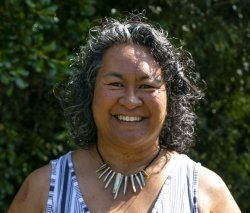
Kayrn Kee
Kayrn, from Ngāti Ranginui, Ngāpuhi, Ngāti Hine, has been working in the New Zealand tertiary education sector about twenty years. She has a background in tertiary education management, policy and information management. In her current role she assists with conference deliveries at Te Wānanga o Raukawa as a medium for sharing Māori ways of knowing that contribute to the survival and vitality of Māori ways of being. Kayrn is providing administrative support to the Whāngai and adoption of Māori project.
ngā ringa rauhī
Project Media
How closed adoption robbed Māori children of their identity
How closed adoption robbed Māori children of their identity
Closed adoption saw thousands of Māori babies handed over to Pākehā families with no way of accessing their ancestral roots. RNZ’s Te Aniwa Hurihanganui looks at the outdated Adoption Act and its impact on Māori who grew up desperate to reconnect.
Closed adoptions a form of violence
A study has found that the practice of placing infants with strangers and effectively severing their relationship with their roots and whakapapa, is completely foreign to Māori.