
KEI TE TUPU TONU: STILL GROWING
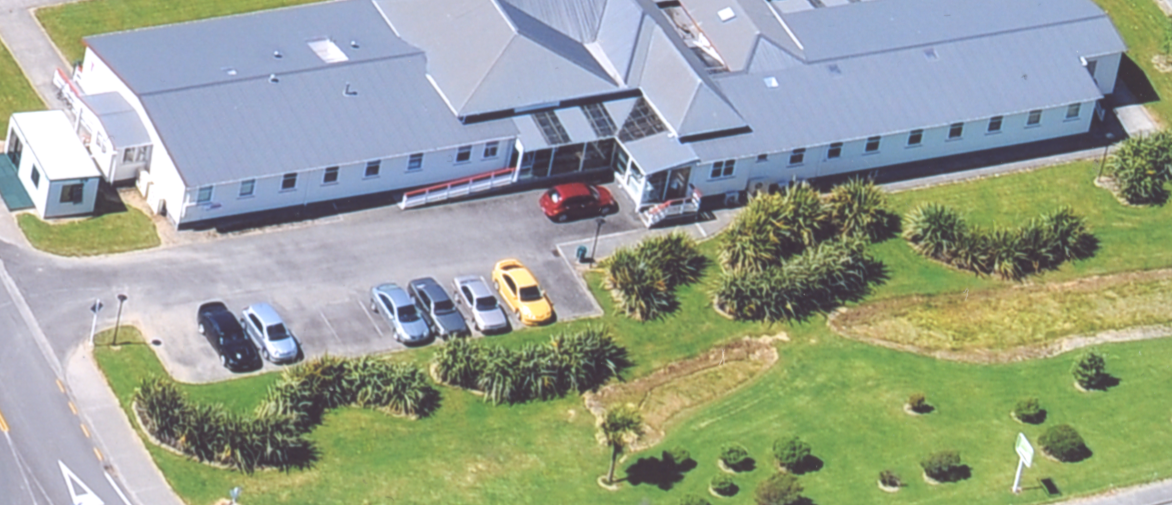
Above: Aerial view of the original pā harakeke c2015
Our pā harakeke has been through some turbulent times. The following summarises how we moved our pā harakeke.
In its heyday our pā harakeke dominated the front of our campus. The plantings were shaped into motu (islands) to provide shelter and allow for wind flow. Each motu had an edging and were mulched with lawn clippings. The original plants came from the Rene Orchiston harakeke collection. The varieties were Takirirau, Arawa, Paoa, Wharanui, Turingawari, Makaweroa, Taiore, Ngaro and Kohunga.
As a student in the 2010’s this was my first introduction to the kaitiakitanga (guardianship) of harakeke. It was my main source of muka (fibre extracted from harakeke), culminating in my rāpaki (a type of traditional wrap around skirt). I got to know the characteristics of each harakeke plant and my favorite was Takirikau. However, being planted at the front of campus it gave easy access to all. Some who looked after the plants and others who raided the plants and left their rubbish. A blossoming peach tree also grew out of one of the motu. Then the ground keepers stopped mulching the motu with lawn clippings and they became overgrown. Flooding of this area happened more frequently and soon after the harakeke started losing its vigor. I helped one weekend to ‘clean up’ the motu, and a couple of trailer loads of old leaves were taken away. We also broke up some plants and replanted them to replace those that had become overgrown. Despite this, Arawa and Paoa became weaker. Later the edgings were removed, and it was discovered that the weed-mats that had been put in had prevented water from soaking through. Grass soon invaded, grew through and eventually over the weaker harakeke.
By 2021 the pā harakeke was really struggling, Arawa and Paoa were gone. With the new campus construction plans all the harakeke plants needed to be moved as the current site would see the demolition of Waitapu (the administration building) and the adjacent grounds to make way for the building now known as Te Moana o Raukawa. A new rain garden for wetland type plants was then going to be planted. The suggestion to replant our pā harakeke into that area was raised, however it became clear to us that it would make each plant almost inaccessible as the entire garden was going to be packed with plantings. We had to find a new location and work out how we were going to manage such a huge task. At that time there were just the three of us in Te Whare Pora, Diane Prince, Hinepuororangi Winiata Tahuparae and me.
Only some of the harakeke plants remained strong, Takirikau, Wharanui, Turingawari and a determined Makaweroa, but considerably less in number than previously. There was only one frail plant each of Taiore, Ngaro and Kohunga.
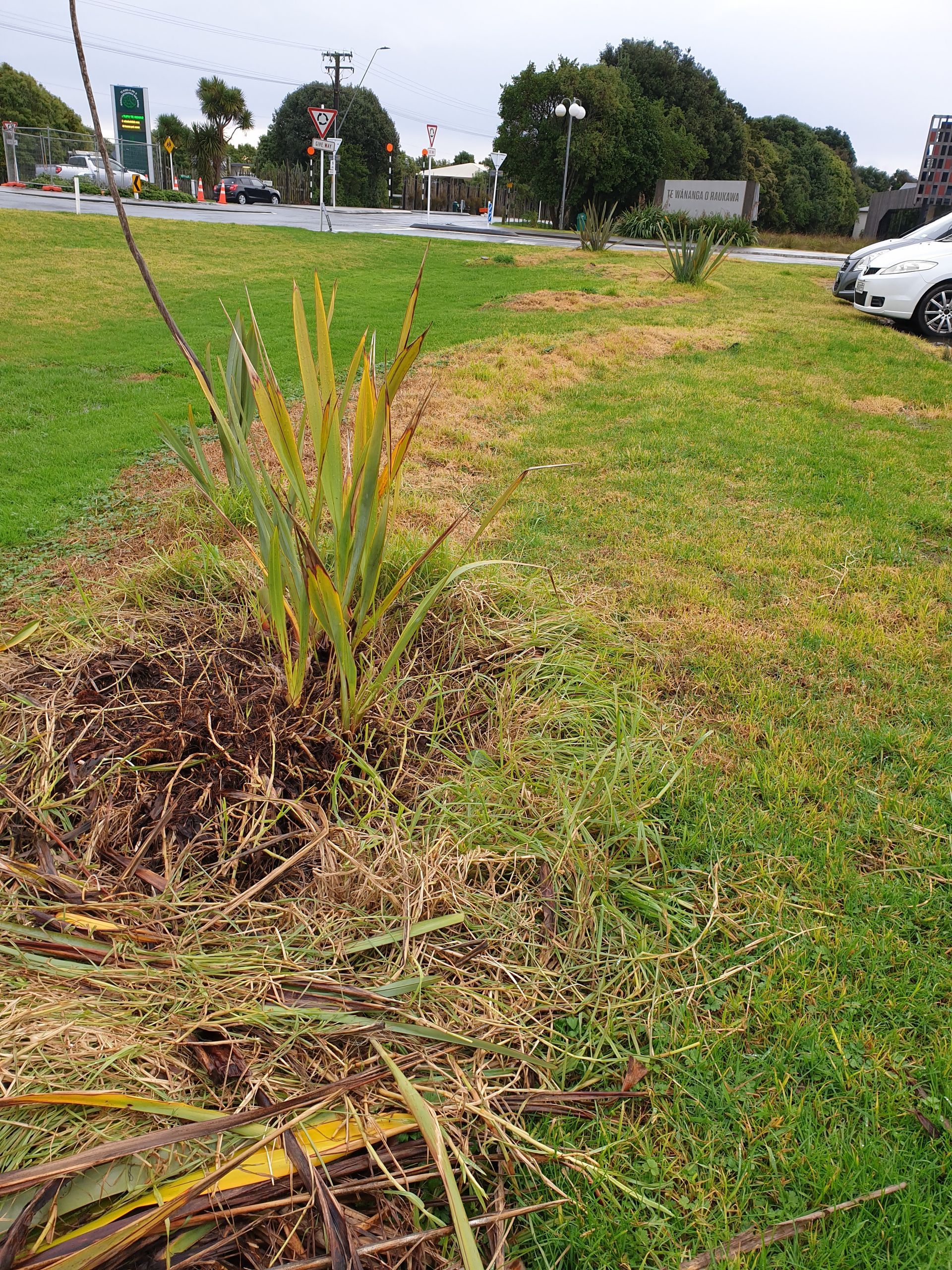
Taiore at the front, then at the back Kohunga and Ngaro all looking frail
New site
The grassy areas around the clothesline at the back of campus was approved for a ‘temporary’ relocation. We took what we could get and set about to mark around those plants that we would cut back in preparation for digging up, separating out and replanting. Kohunga, Ngaro and Taiore were to go into half barrels placed in the inner courtyard of the classroom block used by Te Whare Pora pūkenga and ākonga. Makaweroa at the south end of the clothesline, and Turingawari behind the student sleeping accommodation. This was a mammoth task. We dug holes and identified plants to be separated by circling with spray paint.
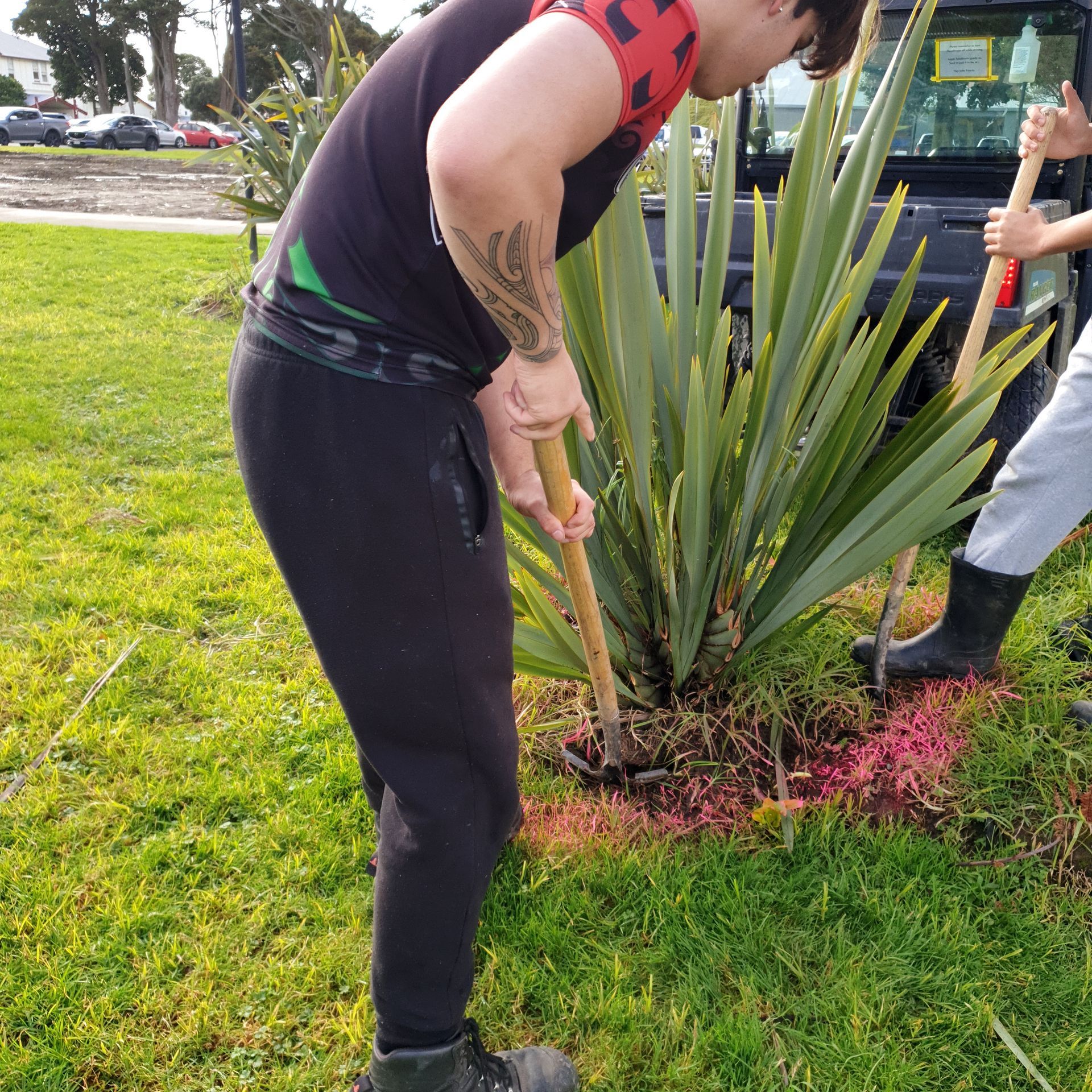
With the help of the ground and maintenance staff, Makaweroa is being dug up before being separated out into puku (rito and matua) to replant.
The soap barrels were brought, washed and cut in half and base frameworks made by Bill Doyle. We used compost and potting mix. We mixed up a brew with worm juice and castings from the worm farms. This was done multiple times throughout the transplanting period.
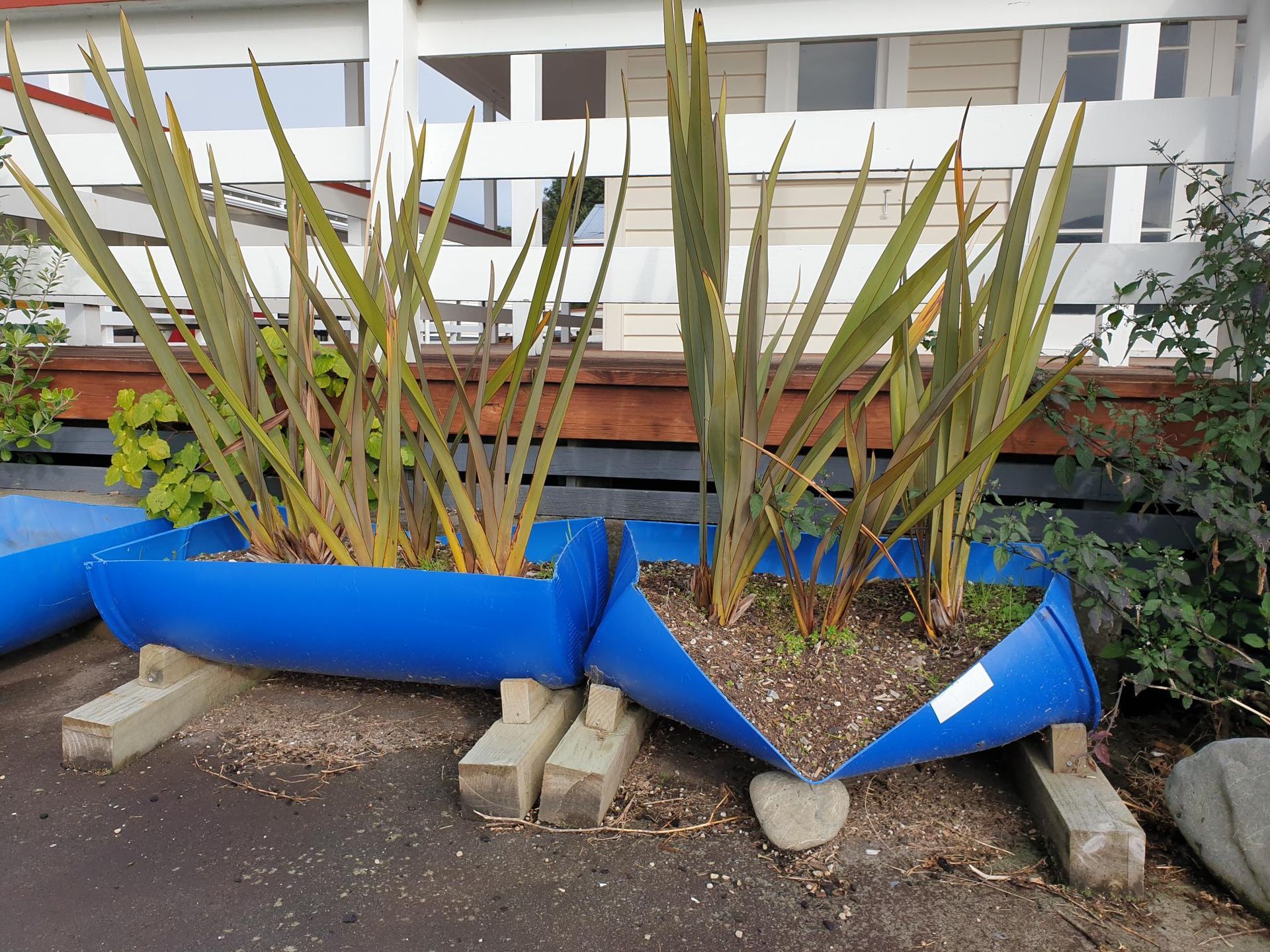
Ngaro growing in half barrels, 2022
On the other hand, Turingawari sulked, she just lay down flat. Her leaves are very soft, and we ended up making frames around her to hold her up. It looked like we had killed her off. Her eventual rescue came with the new construction, a shed and fence were put up alongside her to protect all the materials that were being recycled from the demolished buildings, and all the removed earth was put in the paddock behind her. She was in a sheltered environment protected from the winds. Over that summer she revived. But for most of the year after her July transplant she was not happy at all.
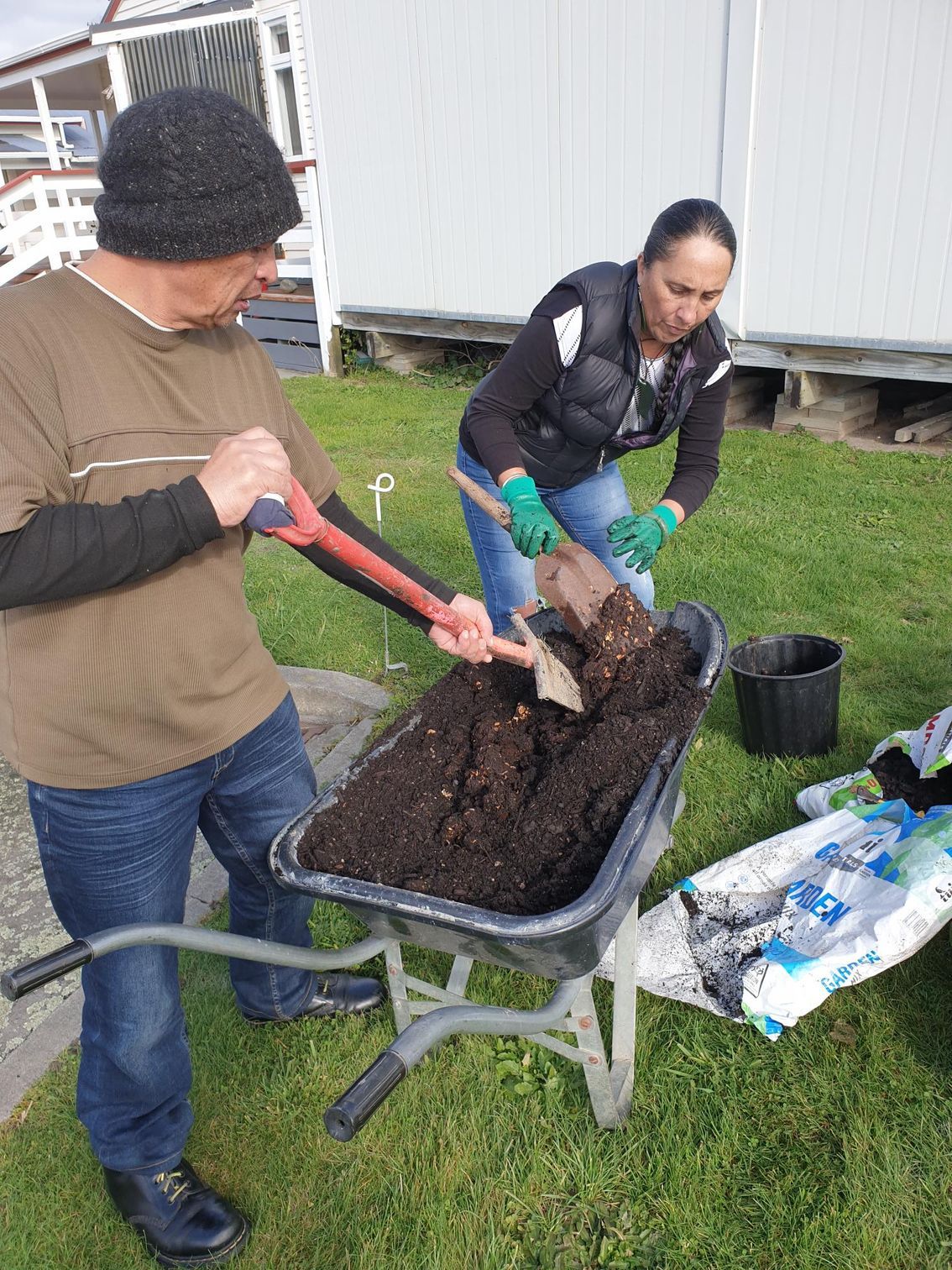
Wirihana and Hine mixing the compost, worm juice and castings for Makaweroa
November 2021 came with the news that a Digger was digging up the remaining harakeke dumping them into the back of a tip truck. We had not been told and rushed out. That poor driver was confronted with distressed weavers asking him to stop. Once he understood that Wharanui and Takirikau could not be mixed up he obliged by making 2 trips to dump them up the back of campus. We were heart broken. It was the hottest November in a long while and we knew that we had a limited window to replant what we could.

That’s Takirikau on the left and Wharanui on the right
Hine, Dianne and I then had to save as much as possible. We were like nannie goats scrambling up and over, dragging out what we could then cutting back and with a wheel barrel bringing them back to replant by Whakatū. This time there were no long preparations for hole digging.
We dug where we could. It was hot, hard work. The ground was rock hard, and we had to use Hine’s waratah to break it open. There were no special blends of compost and potting mix. It was just worm juice and castings straight into the holes and plants on top. It was a race to get the plants in the ground before they died from the heat of the day.
2026 finds our pā harakeke in a strong state, however yellow tip and another move due to construction looms. I’m trying out many methods to keep all in a good condition and will update you next time. Kia kaha te tupu mai.
Part 2 to come! The challenges of keeping them well.
