Study
Ako
News, Events & Key Dates
Kaupapa o te Wā
About Us
Mō Mātou
Whakatupu Mātauranga
Student Experience
Wheako Ākonga

Poutuarongo Ahunga Tikanga
Bachelor of Māori Laws and Philosophy
The essence of Māori society, our values and how these were reflected in the intricate web of social hierarchy and kinship groupings governed how Māori behaved and why. Questions about the fundamental nature of how we lived as Māori and how we changed in the advent of colonial settlement and beyond are explored and examined within Poutuarongo Ahunga Tikanga.

Poutuarongo Ahunga Tikanga
Bachelor of Māori Laws and Philosophy
The essence of Māori society, our values and how these were reflected in the intricate web of social hierarchy and kinship groupings governed how Māori behaved and why. Questions about the fundamental nature of how we lived as Māori and how we changed in the advent of colonial settlement and beyond are explored and examined within Poutuarongo Ahunga Tikanga.
What You'll Learn
The foundational first year Heke Ahunga Tikanga focuses on tikanga Māori, Māori law and the wider philosophical Māori values based system within which all tikanga is derived and practiced with a focus on key concepts such as tapu, noa and utu. The second year grapples with the impact of Pākehā law on tikanga looking at He Wakaputanga o te Rangatiratanga o Nu Tireni and Te Tiriti o Waitangi as well as historical examination of pressure on legal and social systems. The third year focuses on the contemporary context of rangatiratanga and constitutional reform, evaluating the viability of the Waitangi Tribunal and Māori Land Court, alongside the experiences of other indigenous nations.
Course Structure
The Poutuarongo Ahunga Tikanga is a three-year bachelor's degree. Year One is completed through the Heke Ahunga Tikanga (Diploma in Māori Laws and Philosophy). Years Two and Three build on this foundation with increasingly advanced papers in tikanga, Treaty law, and Māori jurisprudence.
Minimum age of 17 years. Regular internet access, email address and computer or laptop with a working mic and camera are required.
Year one
Course of Study
PATA101 - Whakapapa and the Beginning of Law
Examine whakapapa and associated concepts as the basis for Māori Law.
Credits:
15
Pre-requisite:
Nil
PATA102 - The Laws of Ranginui and Papatūānuku
To explain tikanga that derives from the relationship between Ranginui and Papatūānuku.
Credits:
15
Pre-requisite:
PAT101 or PATA101
PATA103 - The Laws of Tāne
Identify and discuss the Laws of Tāne, both historically and in the present.
Credits:
15
Pre-requisite:
PAT102 or PATA102
PATA104 - The Laws of Tangaroa
Outlines tikanga and associated concepts as a basis to describe Māori relationships with water.
Credits:
15
Pre-requisite:
PAT103 or PATA103
Iwi and Hapū
IWI101 - Private Study of One Marae
To conduct a private study of one marae in order to identify and strengthen connections to ‘the marae as our principal home’.
Credits:
15
Pre-requisite:
Nil
IWI102 - Private Study of Iwi History
To study and describe the major historical features of a selected iwi to strengthen identity.
Credits:
15
Pre-requisite:
Nil
Te Reo Māori
REO101 Hui Rumaki Reo 1
The overall aim of the year one reo programme encourages analysis of basic grammar through the online course; an introduction to written Māori; research through self-directed learning and oral practice in the Māori language through Hui Rumaki Reo with an emphasis on marae activities.
Credits:
15
Pre-requisite:
Nil
REO102 Hui Rumaki Reo 2
The overall aim of the year one reo programme encourages analysis of basic grammar through the online course; an introduction to written Māori; research through self-directed learning and oral practice in the Māori language through Hui Rumaki Reo with an emphasis on marae activities.
Credits:
15
Pre-requisite:
REO101 or equivalent experience
Year Two
Course of Study
PATA201 - He Wakaputanga o te Rangatiratanga o Nu Tureni
To discuss political structures that were foreshadowed by He Wakaputanga o te Rangatiratanga o Nu Tireni.
Credits:
15
Pre-requisite:
HAT
PATA202 - Te Tiriti o Waitangi
To describe ways in which Te Tiriti o Waitangi gives expression to tikanga.
Credits:
15
Pre-requisite:
PAT201 or PATA201
PATA203 - The Waitangi Tribunal and The Māori Land Court
To describe the roles and functions of the Waitangi Tribunal, the Māori Land Court and their impacts upon tikanga.
Credits:
15
Pre-requisite:
PAT202 or PATA202
PATA204 - Maintaining Rangatiratanga
To consider the importance of key Māori responses to Crown breaches of Te Tiriti o Waitangi.
Credits:
15
Pre-requisite:
PAT203 or PATA203
Iwi and Hapū
IWI201 - Private Study of One Hapū
To examine the major features and characteristics of a selected hapū in order to deepen our understanding of hapū origins and group survival.
Credits:
15
Pre-requisite:
IWI Y1 or equivalent
IWI202 - Selected Private Studies
Students will gain a deeper appreciation of the cultural significance of a taonga to a selected hapū and/or iwi, and it’s role in strengthening, maintaining and enhancing relationships.
Credits:
15
Pre-requisite:
IWI Y1 or equivalent
Te Reo Māori
REO201 Hui Rumaki Reo 1
The overall aim of the year two reo programme encourages further analysis of grammar through the online course; more developed techniques into researching the language through self-directed learning and oral practice in the Māori language through Hui Rumaki Reo with an emphasis on marae activities and an accumulation of ‘flying time’.
Credits:
15
Pre-requisite:
REO1, MAIT1, REO101W, REO101M ētehi atu wheako rānei e rite ana ki ēnei.
REO202 Hui Rumaki Reo 2
The overall aim of the year two reo programme encourages further analysis of grammar through the online course; more developed techniques into researching the language through self-directed learning and oral practice in the Māori language through Hui Rumaki Reo with an emphasis on marae activities and an accumulation of ‘flying time’.
Credits:
15
Pre-requisite:
REO201 or equivalent experience.
Year Three
Course of Study
PATA301 - Concepts of Māori Law and Justice
To consider Māori and Pākehā conceptions of justice, and whether justice for Māori can be achieved within the imposed legal system.
Credits:
15
Pre-requisite:
PAT Year 2
PATA302 - Justice and the Maintenance of Whakapapa
To understand whakapapa as the foundation of a Māori conception of justice by discussing responsibilities between past, present and future generations and tikanga for maintaining human relationships.
Credits:
15
Pre-requisite:
PAT301or PATA301
PATA303 - Tikanga in an International Context
Develop strategies for advancing tino rangatiratanga in Aotearoa by discussing legal systems, treaty making and experiences of colonisation of other tangata whenua.
Credits:
15
Pre-requisite:
PAT302 or PATA302
PATA304 - Reinforcing Tikanga as Law
To develop strategies for the future by exploring relationships between tikanga, tino rangatiratanga and experiences of colonisation.
Credits:
15
Pre-requisite:
PAT303 or PATA303
Iwi and Hapū
IWI301 - Oral Literature Studies
To advance the students understanding of the intergenerational transmission of kōrero tuku iho in pre 1900’s Māori oral literature.
Credits:
15
Pre-requisite:
IWI Y2 or it’s equivalent
IWI302 - Hapū and Iwi Performance
To be able to assess the performance of a hapū or iwi and formulate strategies to enhance the prosperity of hapū or iwi
Credits:
15
Pre-requisite:
IWI Y2 or it’s equivalent
Te Reo Māori
REO301 Hui Rumaki Reo 1
The overall aim of the year three reo programme encourages deeper analysis of grammar through online learning activities; developed research techniques into acquiring the language through self-directed learning, oral practice in the language in a range of formal and informal situations with care and attention given to a higher degree of accuracy and quality in the language through Hui Rumaki Reo activities and accumulating more ‘flying time’ encourages creative thought with a continued emphasis on marae activities.
Credits:
15
Pre-requisite:
REO2 or MAIT2, REO201W, REO201M, REO201, REO202
REO302 Hui Rumaki Reo 2
The overall aim of the year three reo programme encourages deeper analysis of grammar through online learning activities; developed research techniques into acquiring the language through self-directed learning, oral practice in the language in a range of formal and informal situations with care and attention given to a higher degree of accuracy and quality in the language through Hui Rumaki Reo activities and accumulating more ‘flying time’ encourages creative thought with a continued emphasis on marae activities.
Credits:
15
Pre-requisite:
REO301
How You'll Learn
Residential Seminars (Noho) Attend on-campus noho at Te Wānanga o Raukawa in Ōtaki intensive blocks combining lectures, discussion, and wānanga-style learning.
Weekly Online Tutorials via Mūrau Complete tutorials and activities through our online platform. Te Reo and Iwi/Hapū studies begin in the first week of the academic year.
Hui Rumaki Reo Attend two te reo immersion hui on campus each year (one per semester) to deepen your language skills.
Iwi and Hapū Papers Two online papers per year with weekly tutor-supported activities assignments become taonga for your whānau and marae.
Self-Directed Research Independent study and written work supported by experienced pūkenga throughout.
Online Seminars (Noho) Engage in online webinars and tutorials with opportunities for discussion and wananga learning.
Please contact Te Whare Whakatupu Mātauranga for more information.
Is This Course Right For You?
This qualification is designed for those who want to deepen their understanding of tikanga Māori as a legal and philosophical system and apply that knowledge in advocacy, research, policy, or advisory roles within Māori organisations and communities.
Within this dynamic and often life-changing three-year degree programme, you will investigate the nature of tikanga, an intricate and vast value-based customary law structure that governs Te Ao Māori. Framed within a whakapapa-based knowledge system, tikanga provides a principled and reasoned basis for structuring relationships and actions. Delve into Māori legal systems and consider the influence of Pākehā values on our legal systems, and critique the legal processes that we encounter today.
To enrol in this qualification you must first complete the Heke Ahunga Tikanga which is a one year diploma and the first year towards this three year qualification.
Te Reo and Iwi and Hapū Studies
Each year, you will complete weekly tutorials and activities in Te Reo via our online space, Mūrau. These not only prepare you to attend two five-day long hui rumaki reo on campus at the end of each semester; but will further enhance your ahunga tikanga journey as you learn the value and mana our language holds in the tikanga space. Yes, it can be scary, but you will not be taking the journey alone nor do you do not need to have any reo to begin! You will be guided every step of the way with tutor support.
You will also study two papers per year in Iwi and Hapū studies to compliment your learning, these are often the most rewarding part of study for the majority of our students as they gain a deep connection back to their roots. Your Iwi and Hapū papers will be online with excellent tutor support to help you through, week by week activities. The assignments that you complete will become a taonga and resource for your whānau, marae, iwi and will be treasured for years to come.
Te Reo and Iwi and Hapū studies begin in the first week of the academic year, so you can begin your studies before your first specialisation noho. You will also get the opportunity to meet your reo and iwi and hapū pūkenga during your first noho on campus.
Course Code
PAT
Credits
360
Duration
3 Years
NZQA Level
Level 7
Delivery
Blended learning via residential seminars, self-directed and online
Locations
Te Wānanga o Raukawa, Ōtaki
Mode
Bilingual (Māori/English)
Next Intake
8th Feb - 17th Oct 2027
Tuition Fees
Year 1: See Heke Ahunga Tikanga fees
Year 2: $3,506.68 (approx.)
Year 3: $3,542.33 (approx.)
Years 2 & 3 Total: $7,049.01
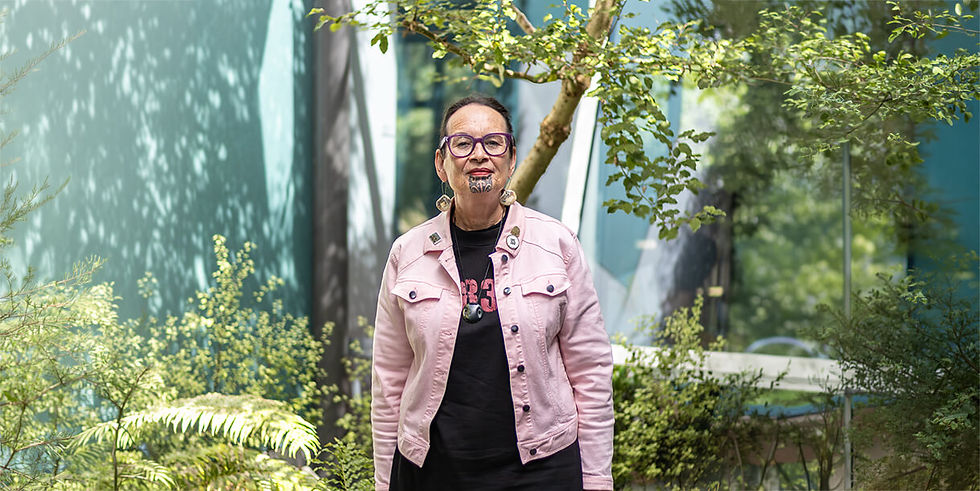
"I get inspired by seeing that aah kua mārama look on the faces of our ākonga as they start to find language that matches and describes the experiences that they've had, when they start to understand the experiences of their parents, grandparents and tūpuna and when they make a connection that allows them to go, do, be or communicate in those whānau settings to improve the outcomes that they're looking for, for their whānau.
I think another thing that our ākonga gain on their journey is experience and confidence their thoughts in an organised way that allows them to do things that mean they can advocate strongly for positions that they want to hold and represent both tikanga and our interest and concerns in a whole range of forums."
Di Grennell
Ngāti Mutunga o Wharekauri, Ngāi Tahu

"The reason why I chose Ahunga Tikanga is because I was looking more philosophically at the western legal structure and te ao Māori. I want to challenge my thinking. And also challenge others in the world that I live in."
Angela Hayden
Te Āti Awa ki Whakarongotai, Ngāti Raukawa, Ngāti Toa Rangatira
Graduate of Heke Ahunga Tikanga
"I get inspired by seeing that aah kua mārama look on the faces of our ākonga as they start to find language that matches and describes the experiences that they've had, when they start to understand the experiences of their parents, grandparents and tūpuna and when they make a connection that allows them to go, do, be or communicate in those whānau settings to improve the outcomes that they're looking for, for their whānau.
I think another thing that our ākonga gain on their journey is experience and confidence their thoughts in an organised way that allows them to do things that mean they can advocate strongly for positions that they want to hold and represent both tikanga and our interest and concerns in a whole range of forums."
Di Grennell
Ngāti Mutunga o Wharekauri, Ngāi Tahu
"The reason why I chose Ahunga Tikanga is because I was looking more philosophically at the western legal structure and te ao Māori. I want to challenge my thinking. And also challenge others in the world that I live in."
Angela Hayden
Te Āti Awa ki Whakarongotai, Ngāti Raukawa, Ngāti Toa Rangatira
Graduate of Heke Ahunga Tikanga
Fees & Funding
Year
Year 1 (Heke Diploma)
Year 2
Year 3
Total (Years 2 & 3)
Tuition (Approx)
See Heke Ahunga Tikanga fees
$3,506.68 (approx.)
$3,542.33 (approx.)
$7,049.01
Fees are approximate and may be subject to change. Additional costs may apply for course materials and travel to noho.
Scholarships
Support is available through scholarships to make study more accessible. Find out more.
Additional Funding Options
You may be able to access student loans, allowances, or Fees Free to support your studies. Learn more.
Entry Requirements
Minimum age of 17 years. Regular internet access, email address and computer or laptop with a working mic and camera are required.
Academic Requirements
Personal Requirements
A strong commitment to developing te reo Māori me ōna tikanga
Ability to attend residential noho at Te Wānanga o Raukawa, Ōtaki
Technology Requirements
-
Regular internet access
-
Email address
-
Computer, laptop, tablet, or suitable mobile device for online learning via Mūrau
Full Requirements
-
For complete entry requirement details, see Appendix One of the Academic Regulations.
Where This Qualification Takes You
Completing this qualification can lead to a variety of career opportunities, including:
Advisor / Advocate for Indigenous Rights Issues
Further study in Ahunga Tikanga at postgraduate level.
Iwi Claims Researcher
Researcher for Hapū and Iwi
Tikanga / Cultural Advisor

Explore Related Courses



Explore Related Courses

Heke Te Rangakura Kaiwhakaako
Diploma in Teaching (Bilingual)
Duration: 1 Year
Level: NZQA Level 5
Poutāhū Whakaakoranga Akorau
Postgraduate Diploma in Blended teaching and learning
Duration: 1 Year
Level: NZQA Level 8
Tāhuhu Whakaakoranga
Master or Education (Māori Medium)
Duration: 1 Year
Level: NZQA Level 9